Blogs

The journey of human life begins with a single microscopic cell. Within just eight weeks, this tiny cell transforms into an embryo with a beating heart, a developing brain, forming limbs, and the foundation of every major organ. Understanding embryonic development week by week can help couples, especially those undergoing fertility treatment, appreciate the incredible complexity of early pregnancy.
Whether conception occurs naturally or through IVF, the first eight weeks are among the most critical stages of pregnancy. During this period, rapid cell division, implantation, organ formation, and genetic programming determine the baby's early growth and development.
At The Boon IVF, we believe that educating patients empowers them to make informed decisions throughout their fertility journey. This guide explains what happens during each week of embryonic development, from fertilization to week 8, in simple and medically accurate language.
Quick Answer: What Is Embryonic Development?
Embryonic development is the process through which a fertilized egg grows into an embryo during the first eight weeks of pregnancy. It begins with fertilization, continues through rapid cell division and implantation in the uterus, and culminates in the formation of all major organs and body systems. After week 8, the embryo is called a fetus.
Why Are the First Eight Weeks So Important?
The embryonic stage is one of the most sensitive periods of pregnancy because nearly every essential organ begins to develop during this time. Any disruption due to genetic abnormalities, hormonal imbalances, infections, or environmental factors can affect implantation or fetal development.
This is why fertility specialists closely monitor early pregnancy after IVF, particularly during the first trimester.
Major milestones during these weeks include:
Fertilization
Cell division
Blastocyst formation
Implantation
Placenta development
Neural tube formation
Heartbeat begins
Limb development
Brain development
Formation of facial features
Embryonic Development Timeline
Week | Major Development |
Week 1 | Fertilization and cell division |
Week 2 | Blastocyst formation and implantation |
Week 3 | Formation of germ layers |
Week 4 | Heart starts beating |
Week 5 | Brain grows rapidly |
Week 6 | Limb buds appear |
Week 7 | Facial features develop |
Week 8 | Major organs formed; embryo becomes fetus soon |
Week 1: Fertilization Begins a New Life
Pregnancy officially begins when a sperm successfully fertilizes an egg in the fallopian tube.
Each parent contributes 23 chromosomes, combining to create a unique genetic blueprint containing 46 chromosomes. This determines characteristics such as eye color, blood type, and biological sex.
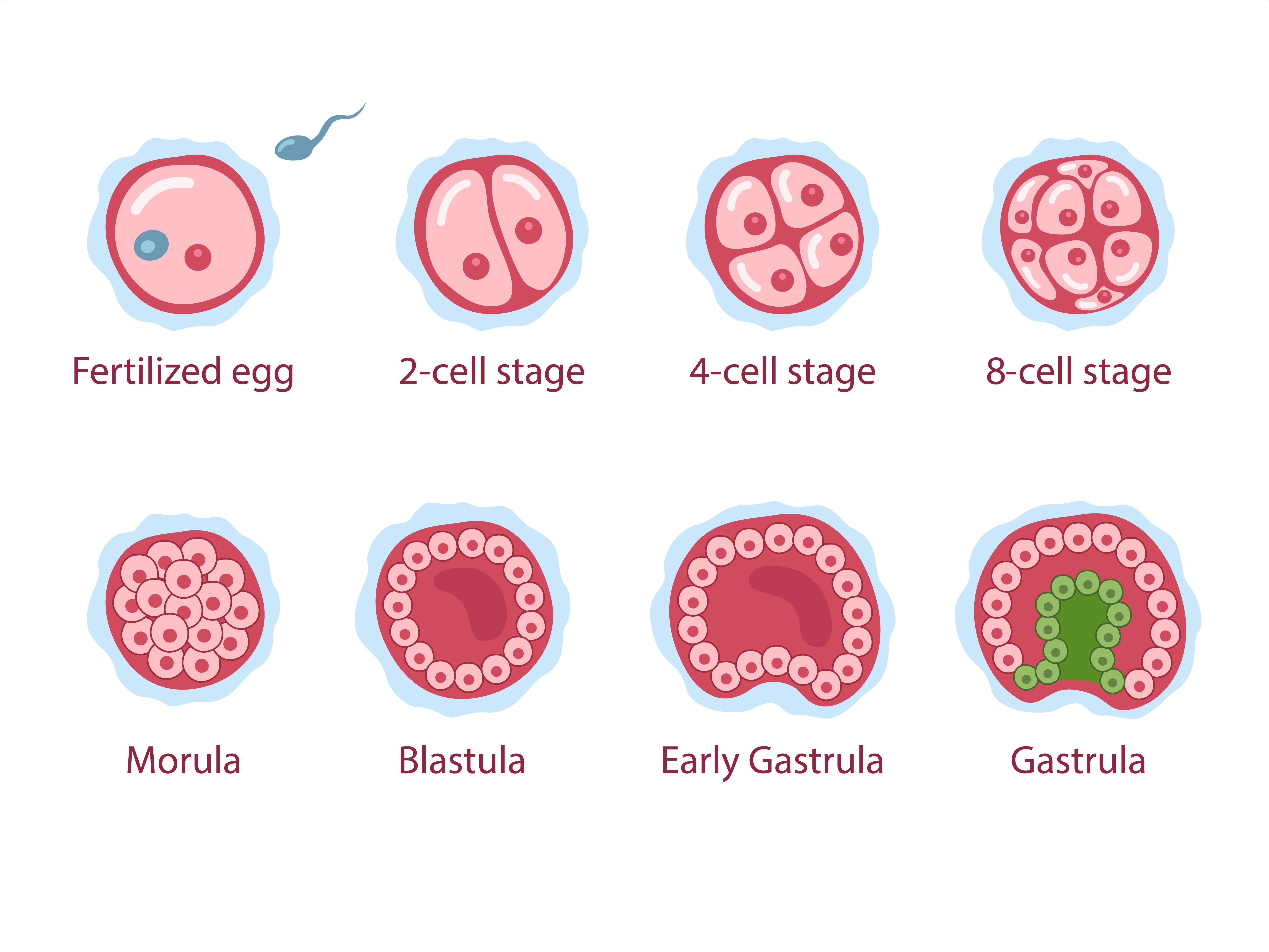
The fertilized egg is called a zygote.
Within hours, the zygote begins dividing rapidly through a process known as mitosis. Instead of immediately growing larger, it divides into progressively smaller cells as it travels toward the uterus.
By approximately day three, the embryo consists of around 16–32 cells and is known as a morula.
At this stage:
Genetic information is established.
Cell division accelerates.
The embryo travels through the fallopian tube.
The zona pellucida protects the embryo during its journey.
For IVF patients, embryologists carefully monitor these early cell divisions in the laboratory to select the healthiest embryos for transfer.
Week 2: Blastocyst Formation and Implantation
Around five to six days after fertilization, the embryo reaches one of its most important milestones—it becomes a blastocyst.
The blastocyst contains two distinct cell groups:
Inner Cell Mass develops into the baby.
Trophoblast Cells develop into the placenta.
The blastocyst then "hatches" from its protective outer shell before attaching to the uterine lining.
This process is known as implantation.
Successful implantation is essential because it allows the embryo to receive oxygen and nutrients from the mother's body.
During implantation:
The uterine lining thickens.
Placental development begins.
Pregnancy hormone (hCG) production starts.
Blood vessels connect with the embryo.
Women may experience:
Mild cramping
Light spotting (implantation bleeding)
Breast tenderness
Fatigue
However, many women notice no symptoms at all.
For IVF patients, implantation typically occurs within one to five days after embryo transfer, depending on whether a Day 3 or Day 5 embryo was transferred.
Why Implantation Sometimes Fails
Even healthy-looking embryos do not always implant successfully.
Common reasons include:
Chromosomal abnormalities
Thin endometrial lining
Hormonal imbalance
Poor embryo quality
Uterine abnormalities
Immune factors
Lifestyle habits such as smoking
This is why fertility specialists evaluate both embryo quality and uterine health before embryo transfer.
Week 3: The Body's Blueprint Begins
By the third week, one of the most remarkable events in human development occurs.
The embryo starts forming three specialized cell layers known as germ layers.
These layers eventually develop into every tissue and organ in the body.
Ectoderm
Develops into:
Brain
Spinal cord
Nervous system
Skin
Hair
Nails
Eyes
Mesoderm
Develops into:
Heart
Bones
Muscles
Kidneys
Blood vessels
Connective tissue
Endoderm
Develops into:
Lungs
Liver
Pancreas
Intestines
Thyroid
Digestive system
This week also marks the beginning of neurulation, during which the neural tube starts forming. The neural tube later develops into the brain and spinal cord.
Adequate folic acid intake during this stage is essential because it significantly reduces the risk of neural tube defects.
Early Placenta Development
Another critical event during week 3 is the continued development of the placenta.
The placenta acts as the baby's lifeline by:
Delivering oxygen
Providing nutrients
Removing waste products
Producing pregnancy hormones
Protecting the developing embryo
Although the placenta continues to mature throughout pregnancy, its foundation is established during these early weeks.
How IVF Supports Healthy Embryonic Development
Whether pregnancy occurs naturally or through IVF, embryonic development follows the same biological process after implantation.
However, IVF offers several advantages before implantation, including:
Careful monitoring of embryo growth in the laboratory
Selection of high-quality embryos
Blastocyst-stage embryo transfer
Genetic testing (when recommended) to identify chromosomal abnormalities
Optimized timing for embryo transfer based on uterine readiness
These advancements help improve the chances of successful implantation and a healthy pregnancy for many couples experiencing infertility.
Week 4: The Heart Begins to Beat
By the fourth week of embryonic development, the embryo measures only about 2–4 mm, roughly the size of a poppy seed. Despite its tiny size, this week marks one of the most exciting milestones in early pregnancy—the primitive heart tube begins to form and starts beating.
Although the heart is not yet fully developed into four chambers, its rhythmic contractions begin circulating blood throughout the embryo. This circulation delivers oxygen and nutrients that are essential for rapid growth.
Key Developments in Week 4
The heart begins beating.
The neural tube continues developing into the brain and spinal cord.
The placenta grows rapidly.
The umbilical cord starts forming.
The early digestive tract begins developing.
Eyes and ears begin to form.
Pregnancy Symptoms During Week 4
Many women may only just discover they are pregnant around this time. Common symptoms include:
Missed menstrual period
Fatigue
Mild abdominal cramping
Breast tenderness
Frequent urination
Mood swings
Implantation-related spotting (in some women)
For IVF patients, blood tests measuring human chorionic gonadotropin (hCG) are typically performed during this period to confirm pregnancy.
Week 5: The Brain Develops Rapidly
Week 5 is a period of extraordinary neurological development. The embryo now measures approximately 4–6 mm, and the brain begins forming at an astonishing pace.
Three primary regions of the brain become distinguishable:
Forebrain
Midbrain
Hindbrain
These structures eventually develop into the complex brain responsible for movement, memory, emotions, learning, and sensory processing.
Major Changes During Week 5
The brain develops rapidly.
The spinal cord continues forming.
The heart beats more regularly.
Blood vessels expand.
Early kidneys begin forming.
The liver starts producing blood cells.
The embryo now resembles a tiny curved shape rather than a simple cluster of cells.
Why Folic Acid Matters
During this critical stage, folic acid plays a vital role in supporting proper neural tube closure. A deficiency can increase the risk of neural tube defects, including spina bifida.
Doctors generally recommend that women trying to conceive begin taking folic acid before pregnancy and continue throughout the first trimester.
Week 6: Tiny Arms and Legs Begin to Grow
By week 6, the embryo measures around 6–8 mm, approximately the size of a lentil.
One of the most noticeable changes this week is the appearance of limb buds, which will eventually develop into arms and legs.
The heart is beating faster, often between 100–120 beats per minute, though this can vary.
Development During Week 6
Arm buds appear.
Leg buds begin forming.
Eyes become more visible.
Ear structures start developing.
Heartbeat strengthens.
The jaw and neck begin forming.
Early muscles develop.
The embryo begins making tiny spontaneous movements, although they are far too small for the mother to feel.
IVF Ultrasound Milestone
Around 6 to 7 weeks, fertility specialists often perform the first ultrasound after IVF.
During this scan, doctors may observe:
Gestational sac
Yolk sac
Fetal pole
Cardiac activity (heartbeat)
Seeing a heartbeat at this stage is an encouraging sign of a progressing pregnancy, although every pregnancy develops at its own pace.
Week 7: Facial Features Begin to Appear
Week 7 brings dramatic changes in appearance. Although the embryo is only about 10–13 mm long, many recognizable human features begin to emerge.
Important Milestones
Eyes become more defined.
Eyelids begin forming.
The nose starts developing.
The mouth becomes visible.
External ears continue developing.
Fingers begin separating.
Bones start replacing cartilage.
The brain continues growing rapidly and now occupies a significant portion of the embryo's head.
Internal organs also become more complex.
The:
Liver
Kidneys
Pancreas
Intestines
Continue their development and prepare for their future functions after birth.
Placenta Growth
The placenta now takes over a larger role in supporting pregnancy by producing essential hormones such as progesterone and estrogen.
These hormones help maintain the uterine lining and support healthy embryonic growth.
Week 8: The Embryonic Stage Nears Completion
Week 8 marks the end of the embryonic period.
The embryo now measures approximately 14–20 mm, roughly the size of a raspberry.
Although still incredibly small, nearly every major organ system has begun developing.
Week 8 Milestones
Fingers and toes become more distinct.
Arms bend at the elbows.
Knees begin forming.
Facial muscles develop.
Eyes move closer together.
External ears become more recognizable.
Bones continue strengthening.
Brain activity increases.
The embryo now displays a much more human appearance.
Tiny movements continue inside the uterus, although they remain too subtle to be felt.
After week 8, the embryo officially enters the fetal stage, during which existing organs continue growing and maturing rather than forming from scratch.
What Happens After Week 8?
Beginning in week 9, the developing baby is referred to as a fetus.
The remainder of the pregnancy focuses on:
Growth
Organ maturation
Weight gain
Brain development
Lung development
Muscle strengthening
By this stage, the foundation for nearly every major body system has already been established.
Factors That Influence Healthy Embryonic Development
Embryonic development depends on a combination of genetic, hormonal, nutritional, and environmental factors. While not every complication can be prevented, maintaining a healthy lifestyle before and during pregnancy can significantly support healthy growth.
1. Maternal Nutrition
A balanced diet rich in vitamins, minerals, protein, healthy fats, fruits, vegetables, and whole grains provides the nutrients needed for rapid cell growth.
2. Folic Acid
Folic acid is especially important during the first trimester because it supports normal neural tube development and reduces the risk of certain birth defects.
3. Healthy Hormone Levels
Adequate progesterone and other reproductive hormones help prepare and maintain the uterine lining for successful implantation and pregnancy.
4. Avoid Smoking and Alcohol
Smoking, excessive alcohol consumption, and recreational drugs can negatively affect embryo development and increase the risk of miscarriage and pregnancy complications.
5. Manage Chronic Medical Conditions
Conditions such as diabetes, thyroid disorders, obesity, and hypertension should be well controlled before and during pregnancy under medical supervision.
6. Regular Prenatal Care
Routine prenatal visits and recommended scans help monitor embryonic growth and identify potential concerns early.
How The Boon IVF Supports Early Pregnancy
At The Boon IVF, our fertility specialists provide comprehensive care from conception through early pregnancy.
Our approach includes:
Personalized fertility evaluations
Advanced IVF laboratory techniques
Blastocyst culture and embryo selection
Preimplantation Genetic Testing (when appropriate)
Early pregnancy blood tests
Ultrasound monitoring
Nutritional and lifestyle guidance
We understand that the first few weeks after conception can be both exciting and emotionally overwhelming. Our team is committed to supporting patients with expert care, compassionate guidance, and evidence-based treatment every step of the way.
Frequently Asked Questions (FAQs)
1. What is embryonic development?
Embryonic development is the process in which a fertilized egg grows into an embryo during the first 8 weeks of pregnancy.
2. When does implantation occur after fertilization?
Implantation usually occurs 6–10 days after fertilization, when the embryo attaches to the lining of the uterus.
3. When does the baby's heart start beating?
The baby's heart begins beating around week 4 and is usually visible on an ultrasound by 6–7 weeks.
4. What is the difference between an embryo and a fetus?
An embryo develops during the first 8 weeks, while from week 9 onward, it is called a fetus.
5. Does IVF affect embryonic development?
No. After implantation, embryonic development is the same in both IVF and naturally conceived pregnancies..
Key Takeaways
The first eight weeks of pregnancy are among the most remarkable stages of human development. In just a short time, a single fertilized cell transforms into a tiny embryo with a beating heart, a developing brain, forming limbs, and the foundation of every major organ.
Understanding embryonic development week by week helps parents appreciate the incredible milestones that occur during early pregnancy. Whether conception happens naturally or through IVF, proper prenatal care, a healthy lifestyle, balanced nutrition, and timely medical guidance all contribute to supporting healthy embryonic growth.
At The Boon IVF, we are dedicated to providing expert fertility care and compassionate support, helping couples navigate every step of their journey toward parenthood with confidence and hope.
Curious about IVF? Let's Talk
Call Us:
+91 777 2920 777
Email Us:
helpdesk@theboonivf.com
What is IVF and how does it help?
What is the success rate of IVF?
How long does the IVF process take?
Is IVF safe?
When should we consult a fertility specialist?
" height="413.26920374512036px" id="IevLqxMPl" width="1327.9993314966944px"/></g></svg>)