Ovarian cancer is often called a “silent disease” because it develops quietly, without clear symptoms in the early stages. But beyond its impact on health, ovarian cancer brings another heavy concern for many women—the fear of losing fertility. Questions like “Can I still get pregnant?”, “Will treatment damage my ovaries?” or “Should I freeze my eggs?” create anxiety and emotional stress during an already challenging time.
At The Boon IVF in Hyderabad, we work closely with women who are diagnosed with ovarian cancer or are undergoing treatment. With modern reproductive science, fertility preservation and successful pregnancy are still possible—even after cancer.
This in-depth guide explains how ovarian cancer affects fertility, what options women have, and how timely decisions can protect their dream of motherhood.
1. Understanding Ovarian Cancer
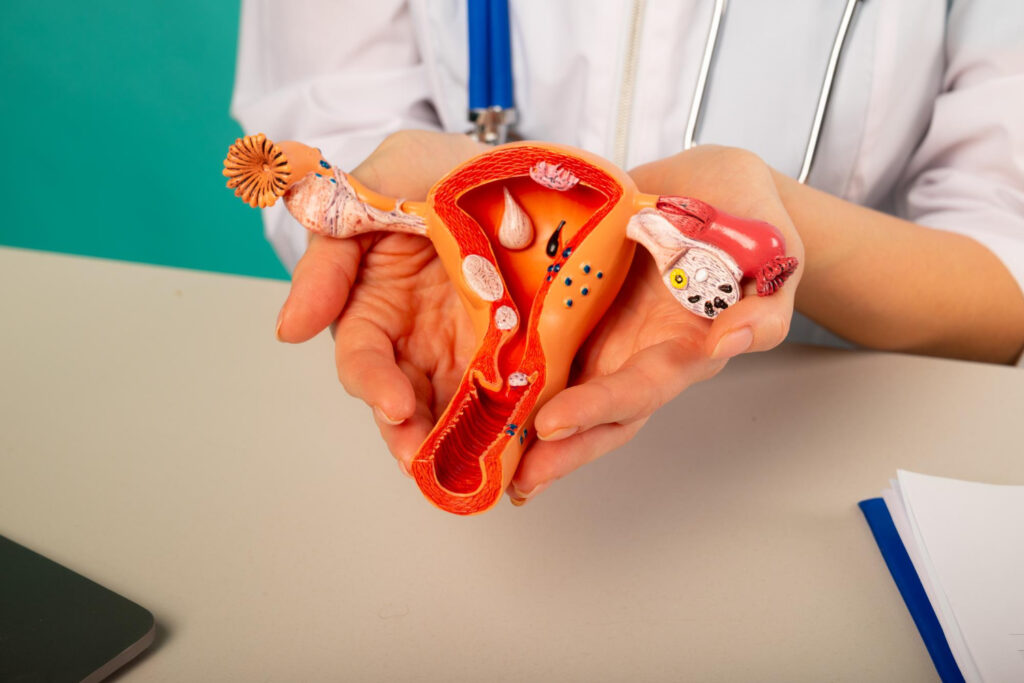
Ovarian cancer begins when abnormal cells grow uncontrollably in the ovaries. The ovaries are responsible for:
- Producing eggs (oocytes)
- Releasing eggs during ovulation
- Producing hormones such as estrogen and progesterone
When cancer develops here, it disrupts these vital reproductive functions.
Types of ovarian cancer
- Epithelial ovarian cancer – Most common
- Germ cell tumors – Arise from egg-producing cells.
- Stromal tumors – Affect hormone-producing cells.
Some types are more aggressive, while others are slow-growing and treatable.
2. How Ovarian Cancer Itself Impacts Fertility
Even before treatment begins, ovarian cancer can affect fertility in various ways.
A. Reduced Ovarian Reserve
Cancer may damage or reduce the number of healthy eggs left in the ovaries.
A lower ovarian reserve means:
- Fewer eggs
- Lower quality eggs
- Difficulty achieving a natural pregnancy
Even if only one ovary is affected, the overall egg count may decline.
B. Interference with Ovulation
Cancer disrupts normal ovarian function.
This results in:
- Irregular ovulation
- Anovulatory cycles (no ovulation)
- Hormonal imbalance
If the ovary does not release eggs regularly, fertilization becomes difficult.
C. Damage to Reproductive Structures
Cancer can spread to:
- Fallopian tubes
- Uterus
- Pelvic lining
- Surrounding tissues
This may cause:
- Blocked tubes
- Pelvic inflammation
- Difficulty in embryo implantation
D. Menstrual Irregularities
Women may experience:
- Missed periods
- Heavy bleeding
- Abnormal spotting
These irregularities often signal hormonal disruption or ovarian damage.
E. Early or Premature Menopause
As ovarian tissue becomes damaged, hormone levels drop.
Early menopause leads to:
- No ovulation
- Zero egg production
- Inability to conceive naturally
This is more common when cancer appears at a younger age.
3. How Ovarian Cancer Treatments Affect Fertility
While treatment is essential for survival, different therapies have different impacts on fertility.
A. Surgery
Surgery is the primary treatment for most ovarian cancers.
Types of surgeries:
Unilateral oophorectomy
Removal of one ovary.
The remaining ovary can still release eggs.
Pregnancy is still possible naturally or through IVF.
Bilateral oophorectomy
Removal of both ovaries.
Natural pregnancy is not possible.
Fertility depends on egg/embryo freezing done earlier.
IVF with donor eggs becomes an option if eggs aren’t preserved.
Hysterectomy
Removal of the uterus.
Natural pregnancy is impossible because there is no womb.
Surrogacy is the only option, using your preserved embryos or donor embryos.
Fertility-sparing surgery
In early stages, doctors may preserve:
- One ovary
- Uterus
- Fallopian tubes
This allows the woman to conceive after recovery.
Fertility-sparing surgery is possible only in selected, early-stage cases.
B. Chemotherapy
Chemotherapy acts like a double-edged sword.
It destroys cancer cells but also damages fast-growing cells — including egg cells.
Effects of chemotherapy on fertility include:
- Rapid decline in ovarian reserve
- Poor egg quality
- Irregular ovulation
- Early menopause
- Temporary or permanent infertility
The severity depends on:
- Age
- Type of drugs
- Number of cycles
- Overall health
Younger women usually recover better, but fertility preservation BEFORE starting chemo is the safest approach.
C. Radiation Therapy
Radiation is rarely used for ovarian cancer, but it may be used when the cancer spreads.
Radiation can cause:
- Ovarian failure
- Uterine scarring
- Lack of menstrual cycles
- Early menopause
Radiation to the pelvic region is especially damaging.
4. Fertility Preservation Options Before Treatment
The most important step for women diagnosed with ovarian cancer is preserving fertility BEFORE starting treatment.
At The Boon IVF, we offer multiple fertility preservation methods based on urgency, age, and cancer stage.
A. Egg Freezing (Oocyte Cryopreservation)
This is the most common and successful fertility preservation option.
Steps include:
- Hormone injections to stimulate egg production
- Egg retrieval procedure
- Freezing the eggs at -196°C
Later, these eggs can be fertilized through IVF to achieve pregnancy.
Best for:
Women who are not married or do not have a partner.
B. Embryo Freezing
If the woman has a partner or chooses donor sperm, embryos can be frozen.
Process:
- Eggs are retrieved
- Fertilized with sperm in the lab
- Embryos are frozen
Embryos have a higher survival and pregnancy rate than eggs.
C. Ovarian Tissue Cryopreservation
This is ideal when:
- There is no time for egg retrieval.
- Cancer treatment must start immediately.
- The woman is very young.
A part of ovarian tissue is surgically removed and frozen.
After cancer treatment, it can be reimplanted to help restore fertility.
D. Fertility-Sparing Surgery
For early-stage cancers, surgeons may remove only the affected ovary and preserve fertility organs.
Not all patients qualify — an oncologist and fertility specialist must jointly decide.
5. Can Women Get Pregnant After Ovarian Cancer Treatment?
YES — many women successfully conceive after treatment.
Pregnancy is possible through:
Natural conception
If one ovary and the uterus are intact, and periods resume normally. IVF
If ovarian reserve is low or natural conception is difficult.
Donor eggs
If chemotherapy severely damages egg quality.
Surrogacy
If the uterus is removed, but eggs were preserved earlier.
Embryo transfer after ovarian tissue reimplantation
A new-age option showing promising success.
The team at The Boon IVF evaluates each case and guides women toward safe, personalized fertility options.
6. Emotional and Psychological Impact on Fertility
A cancer diagnosis is not just a medical challenge — it affects a woman emotionally, mentally, and socially.
Common feelings include:
- Fear of infertility
- Anxiety about survival
- Uncertainty about future pregnancy
- Body image issues
- Relationship stress
- Loss of self-esteem
This emotional burden can itself disrupt hormonal balance and impact reproductive function.
At The Boon IVF, we offer counseling, fertility coaching, and psychological support to help women navigate these challenges with confidence and clarity.
7. Post-Treatment Fertility Testing
Once treatment is over, a fertility assessment is essential.
Tests include:
AMH (Anti-Müllerian Hormone) test
Check the remaining egg reserve.
Antral follicle count (AFC) via ultrasound
Shows the number of follicles in the ovaries.
Hormone profile (FSH, LH, Estradiol)
Assesses ovulation and ovarian function.
Semen analysis for the partner
Ensures male fertility is intact.
Uterine evaluation
Checks if the uterus can support pregnancy.
These tests help determine whether natural conception or IVF is the best route.
8. Is Pregnancy Safe After Cancer Treatment?
Most women can safely get pregnant after ovarian cancer recovery, but only after medical clearance.
Doctors usually recommend waiting:
- 6 months to 2 years
- Depending on cancer type and recurrence risk.
The Boon IVF collaborates with oncologists to plan safe timing for pregnancy.
Pregnancy does NOT increase the risk of cancer recurrence.
9. How The Boon IVF Supports Cancer Patients
We provide personalized, compassionate care through every step.
Our services include:
- Fertility preservation counseling
- Egg freezing and embryo freezing
- Ovarian tissue preservation
- IVF and ICSI
- Donor egg IVF
- Surrogacy support
- Hormone health management
- Precise fertility assessment
- Emotional and psychological counseling
We ensure that every woman has the chance to plan her future family—no matter how difficult the diagnosis may be.
Conclusion
A diagnosis of ovarian cancer does not mean the end of your fertility journey. Thanks to advanced reproductive technologies and expert medical guidance, women can preserve their fertility even before treatment begins. And many women go on to enjoy healthy pregnancies after recovery.
With the right planning, timely action, and the support of a specialized center like The Boon IVF, Hyderabad, you can protect your fertility and your dream of motherhood.
Ovarian cancer may change your journey — but it does not have to steal your hope.